The near-extinction
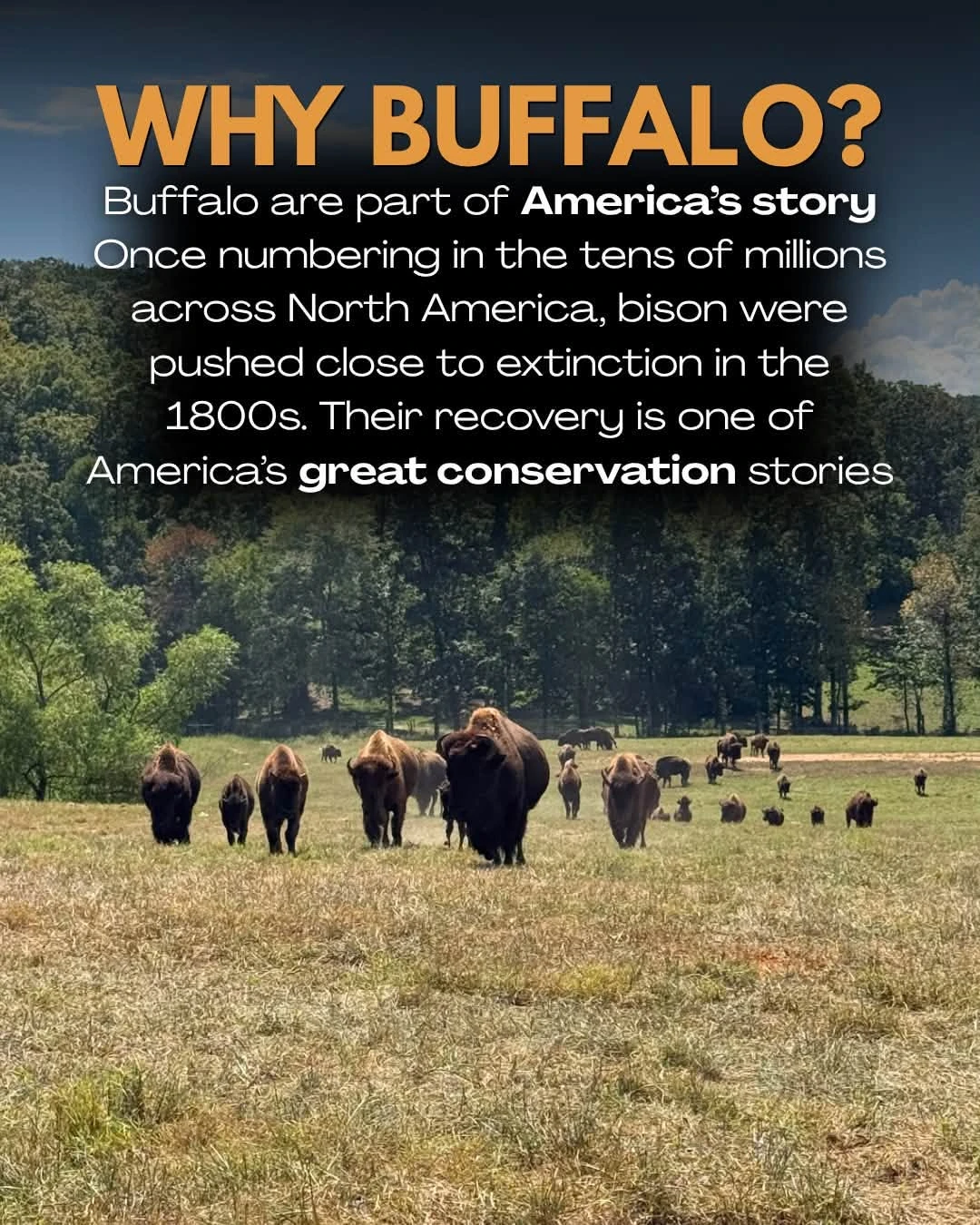
Estimates of how many bison lived on the Great Plains before 1800 range from 30 to 100 million (Smithsonian's National Zoo). The National Park Service says herds once numbered roughly 40 million. By the 1890s, fewer than 1,000 bison remained on the whole continent.
Bison also lived in the East. An estimated 2 to 4 million lived east of the Mississippi River, and Daniel Boone reported seeing thousands on Kentucky's bluegrass in 1769 (NPS).
In Tennessee, the Tennessee Encyclopedia says the last two reports of bison were recorded near Nashville in 1795, while an NPS history lists bison as gone from the state by 1823. Long hunters in the early 1700s described grasslands populated with bison and elk as far as the eye could see, and Native Americans used fire to keep those grasslands open.
The recovery
- 1894. The Lacey Act allowed stronger punishment for people who poached Yellowstone's wildlife.
- 1902. Poachers had reduced Yellowstone's herd to about two dozen animals. The U.S. Army brought in 21 bison from two private herds to help rebuild it.
- 1905. The American Bison Society formed. The National Park Service describes it as the first national effort to save an American wildlife species.
- 1907. Bison were brought back to the Wichita Mountains in Oklahoma.
- May 9, 2016. The National Bison Legacy Act was signed, making the American bison the national mammal of the United States.
- Today. About 500,000 bison are raised as livestock, while roughly 30,000 live in conservation herds. Those conservation herds live on only about 1 percent of the bison's original range (Smithsonian's National Zoo).
Cultural significance
The National Park Service notes that Native American tribes especially revere Yellowstone's bison as descendants of the historic Great Plains herds. Dozens of tribes take part in the InterTribal Buffalo Council, which helps tribes return bison to tribal lands, and over one million acres of tribal land now support bison conservation and cultural efforts.
When bison became the national mammal, the Wildlife Conservation Society called them an ecological keystone, a cultural bedrock and an economic driver. Bison matter to different nations in different ways. This page shares only what the cited sources say, and it is not a substitute for the voices of Native nations themselves.